From Plague God to Wealth God
The Soushen Ji knew Zhao Gongming as a general of plague; the Fengshen Yanyi recast him as marshal of wealth. Across the distance of one novel, a god of affliction became the most popular deity in Chinese shops.

道法自然
財神 趙公明
Marshal Zhao of Prosperity
Festival · 5th day of the 1st lunar month
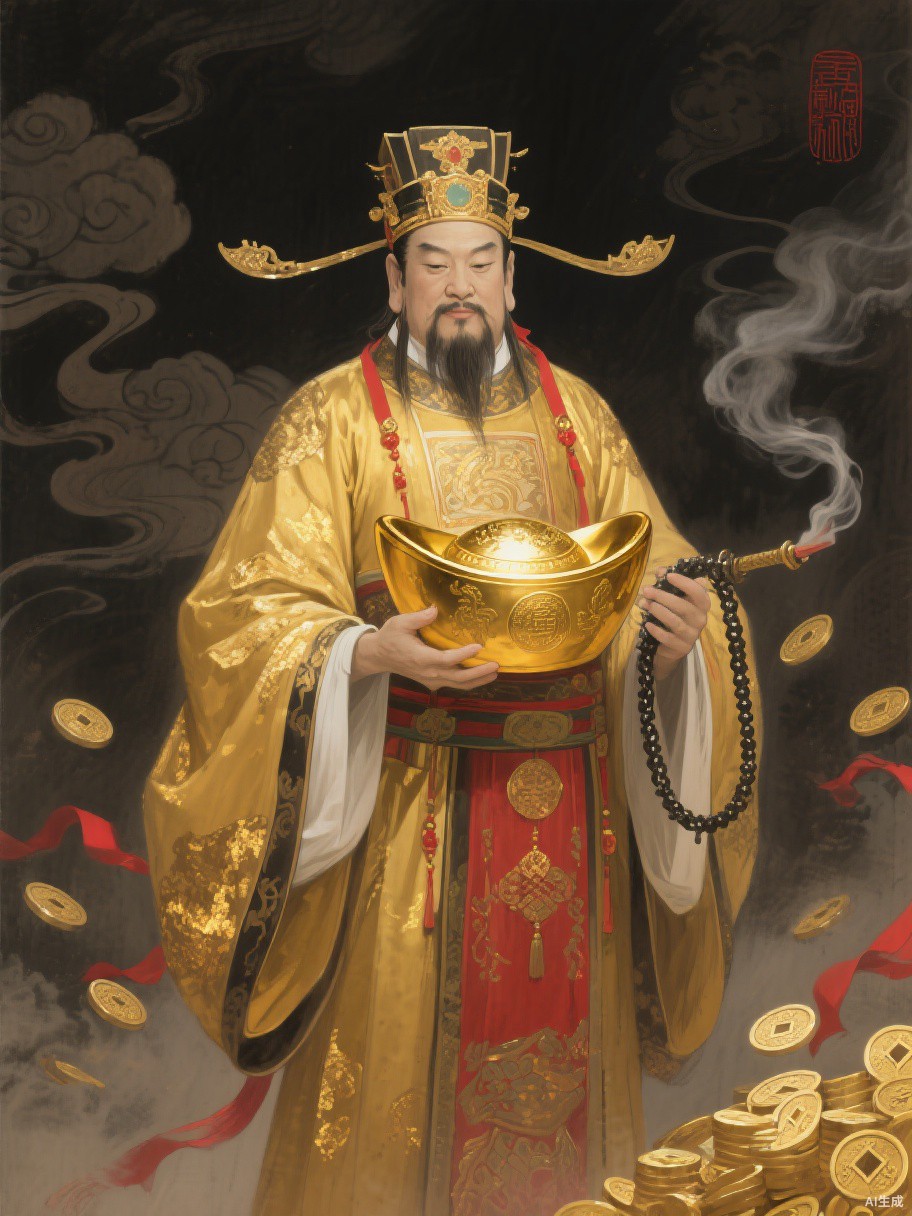
Marshal Zhao of Prosperity
Most commonly identified with the marshal Zhao Gongming, keeper of the treasury of heaven. On the fifth day of the New Year, households across China open their doors to welcome him with firecrackers, hoping for an honest and prosperous year.
Festival · 5th day of the 1st lunar month
History · 史记
Zhao Gongming, Marshal of the Black Tiger Altar, is Taoism's god of wealth — but his career began in a darker place. The Jin-dynasty Soushen Ji lists him among the plague generals who descend with disease; only in the Ming Fengshen Yanyi was he transformed, enfeoffed as Zhengyi Longhu Xuantan Zhenjun, governing four officers of wealth and welcoming prosperity.
He rides a black tiger and carries an iron whip — the iconography of a martial god turned benefactor. On the fifth day of the New Year, shops and households welcome the wealth-god with firecrackers and open doors; the Qing Jialu describes the night's rituals in detail.
The Soushen Ji knew Zhao Gongming as a general of plague; the Fengshen Yanyi recast him as marshal of wealth. Across the distance of one novel, a god of affliction became the most popular deity in Chinese shops.
On the fifth day of the first month every shop reopens with firecrackers, offerings and gates flung open toward the road of the wealth-god. The Qing Jialu records Suzhou on that night: streets bright as day, all welcoming the god of wealth.
搜神記
The Jin-dynasty record of spirits, preserving Zhao Gongming's earliest identity as a plague general.
封神演義
The Ming novel that enfeoffed him as Marshal of the Black Tiger Altar and lord of wealth.
清嘉錄
The Qing-era record of Suzhou customs, describing the New Year rites of welcoming the wealth-god.